

Today, AI answers are a primary way users receive information that drives zero-click search results. Optimizing for them requires strategies different from traditional SEO. AEO is focused on content that can be directly surfaced in AI-generated responses as the Answer. What is AEO? A new approach to content optimization—one that goes beyond conventional search engine optimization to target AEO answers. Today’s top platforms like Google AI Overviews, ChatGPT, Perplexity, and Gemini act as AI answer engines, synthesizing information from across the web to deliver fast, helpful, human-like answers. Answer Engine Optimization (AEO) is the strategy brands must adopt to ensure their Products, Services, Insights, and Content are accurately and consistently cited in the AI-generated answers.
Table of Contents
How are Answer Engine Optimization (AEO) and Search Engine Optimization (SEO) different?
AEO focuses on optimizing content for AI-generated answers and zero-click searches. SEO concentrates on ranking in search engine results pages. Understanding the key differences between AEO and traditional SEO is crucial for effective digital marketing strategies. AEO is focused on content that can be directly surfaced in AI-generated responses as an Answer. Answer Engine Optimization AEO prioritizes becoming the definitive source cited within AI-generated answers. That is an important distinction. AEO is focused on the answers within geo-complete-guide-to-ai-search/" target="_self" rel="noopener noreferrer">Generative Engine Optimization (GEO). The goal is to appear in answer engine results across various AI platforms, increasing your content’s reach and authority.
Today, AI answers are a primary way users receive information, and optimizing for them requires strategies different from traditional SEO. AEO is a new approach to content optimization—one that goes beyond conventional search engine optimization to target AEO answers. Today’s top platforms like Google AI Overviews, ChatGPT, Perplexity, and Gemini act as AI answer engines, synthesizing information from across the web to deliver fast, helpful, human-like answers. Answer Engine Optimization (AEO) is the strategy brands must adopt to ensure their Products, Services, Insights, and Content are accurately and consistently cited in the AI-generated answers.
The digital marketing landscape is experiencing its most significant shift since the advent of search engines. While traditional search engines dominated information discovery for over two decades, AI-powered answer engines are rapidly reshaping how users find and consume information online. Answer engine optimization represents this evolution, focusing on securing visibility within AI search platforms like ChatGPT, Google AI Overviews, Perplexity AI, and Bing Copilot. Google’s AI plays a crucial role in shaping answer engine results, as its features like AI Mode and AI Overviews influence how content is surfaced and cited. Unlike traditional seo strategies that aim to drive clicks to websites,
As we navigate 2025, the stakes have never been higher. Early adopters are already securing significant advantages in AI search visibility, while businesses that delay implementation risk losing their digital footprint in an AI-dominated search environment. Understanding and targeting the right search terms is essential to improve your chances of appearing in answer engine results and aligning your content with user intent. This comprehensive guide will equip you with the knowledge and strategies needed to master answer engine optimisation and secure your brand’s future in ai search.
What is Answer Engine Optimization (AEO)?
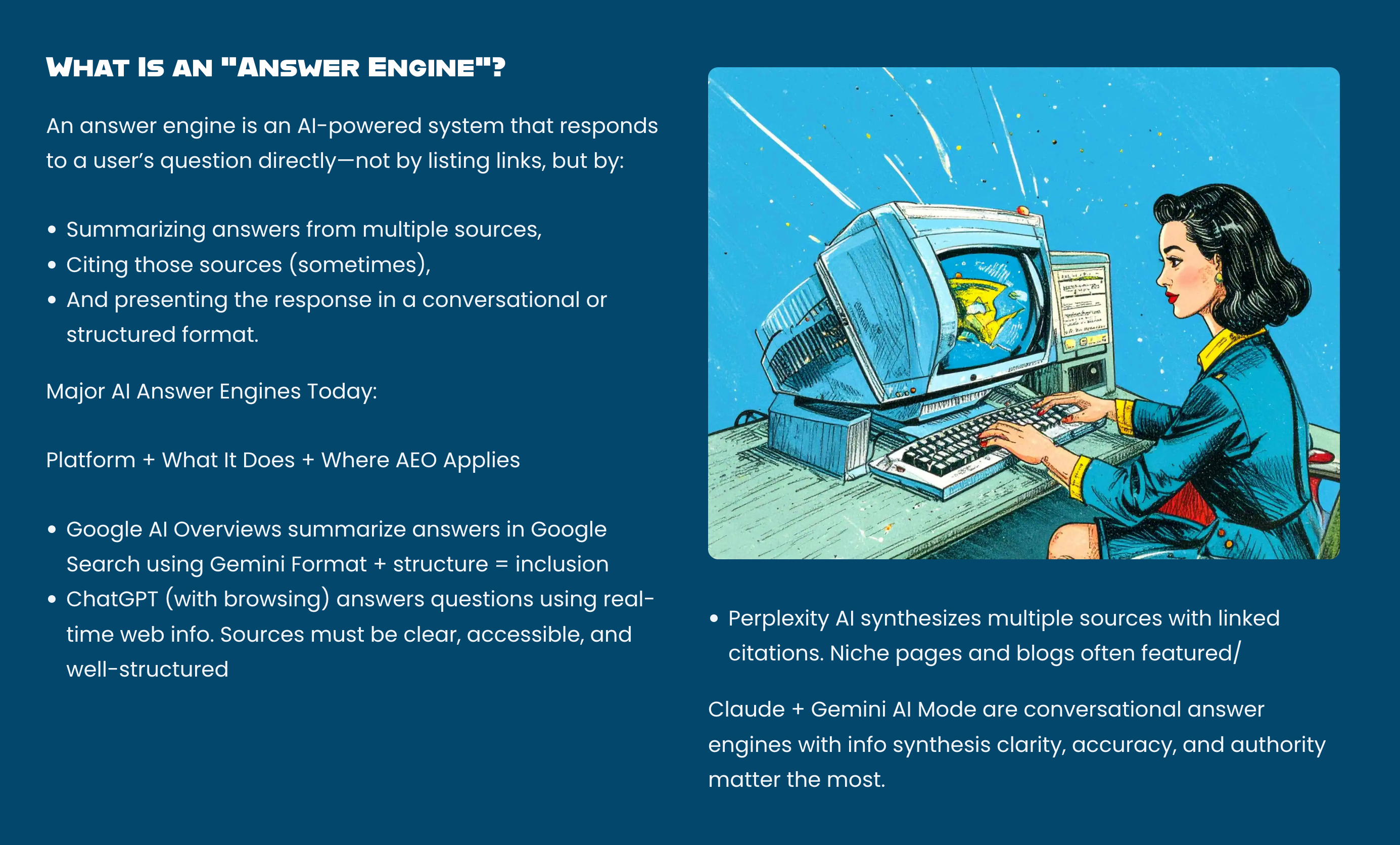
Search engine optimization is the practice of optimizing content for AI-powered search engines and platforms that generate direct responses to user queries. These platforms create AI responses that directly address user queries, often providing immediate information without requiring users to visit a website. Rather than competing for rankings on traditional search engine results pages, answer engine optimization targets the single AI-generated response that users receive when interacting with AI tools like ChatGPT, Google’s AI overviews, Perplexity AI, and Microsoft’s Bing Copilot.
This approach represents a fundamental departure from conventional search engine optimization. While traditional seo focuses on improving website rankings to attract clicks, answer engine optimisation aims to ensure your content becomes the source material that AI engines cite and synthesize within their responses. The goal is visibility and credibility within AI-generated summaries, even if users never click through to your original website. Appearing in answer engine results is crucial to maximizing your content’s visibility in these AI-driven environments.
What’s the Difference Between AEO and GEO?
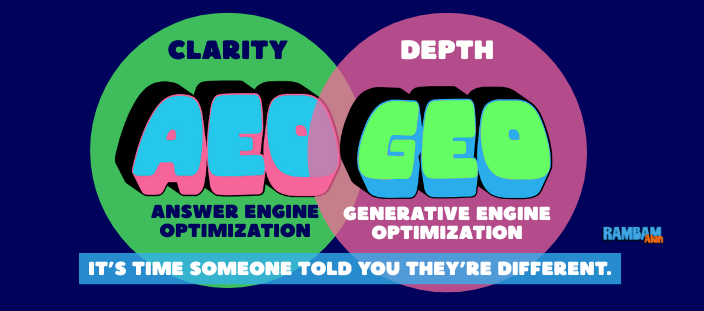
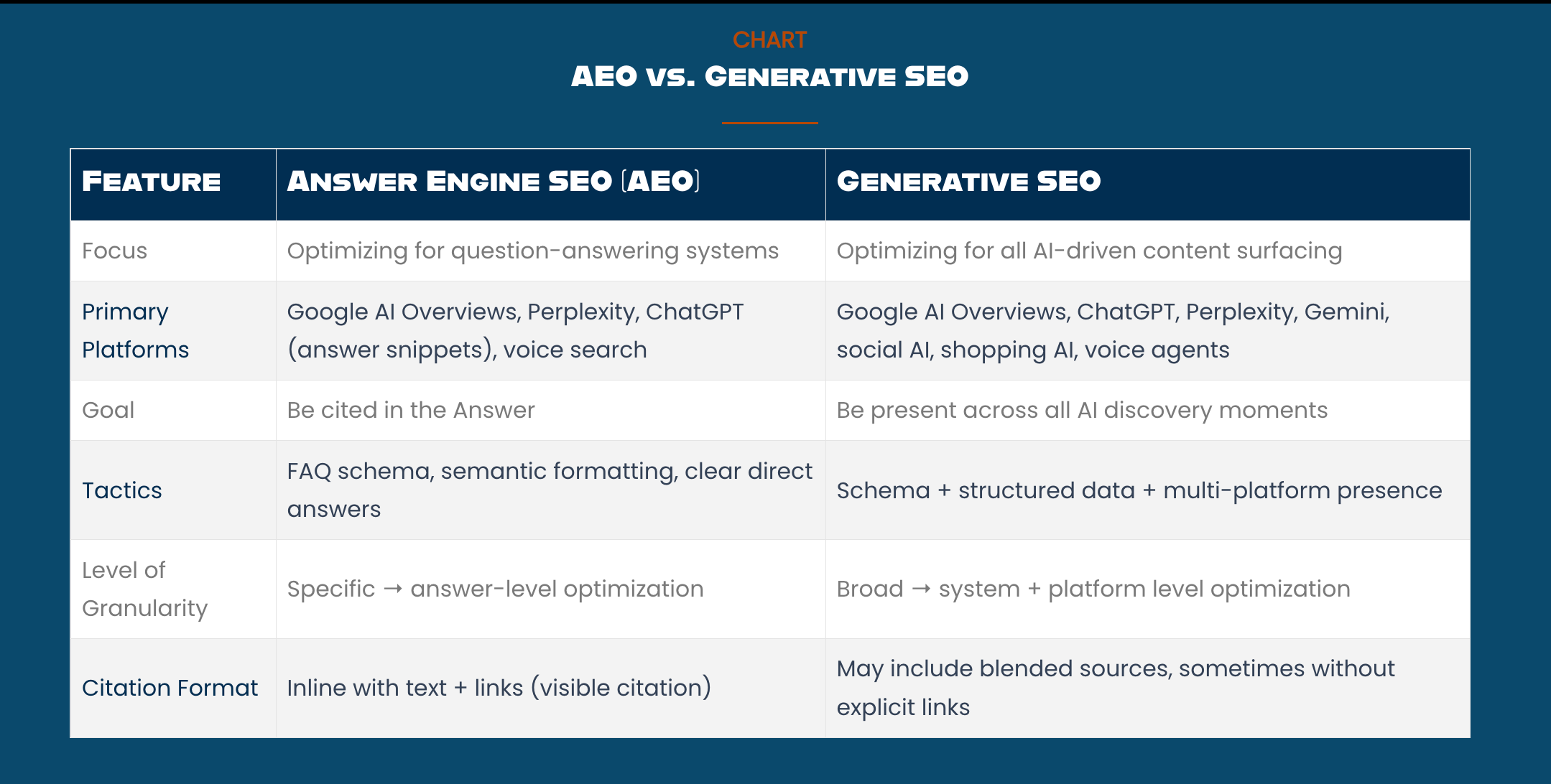
It’s essential to know the difference between AEO and GEO — I’ve seen some of the biggest names in GEO platforms confuse these terms. AEO focuses on getting content into short, direct answers for snippets, voice search, and AI overviews. GEO focuses on creating content suitable for AI models to generate longer, more complex, and cited explanations. AEO is about quick wins; GEO is about being a credible, comprehensive source that generative AI can pull from.
- AEO = The precise answer. Short, structured, 40–60-word answers optimized for extraction. These are the answers that you often see at the beginning of an AI overview.
- GEO = The authoritative source. Rich, contextual, linked, cited, entity-driven content that AI models trust and incorporate into longer generated explanations.
- AEO is often the “first step” in GEO.
- AEO provides AI with the clarity it needs to identify key concepts.
- GEO gives AI the depth it needs to build high-quality, trustworthy output.
AEO is the Quick Answer, and GEO is the FULL Explanation.
The practice is also known by several alternative names throughout the industry. Generative engine optimization (GEO) emphasizes the generative nature of AI responses, while LLM Optimization (LLMO) focuses on targeting large language models specifically. Some practitioners prefer the term AI search optimization, which encompasses all optimization efforts for AI-powered platforms. Featured snippets, a Google search feature, serve as an early example of direct answers in traditional search, providing concise responses directly in search results.
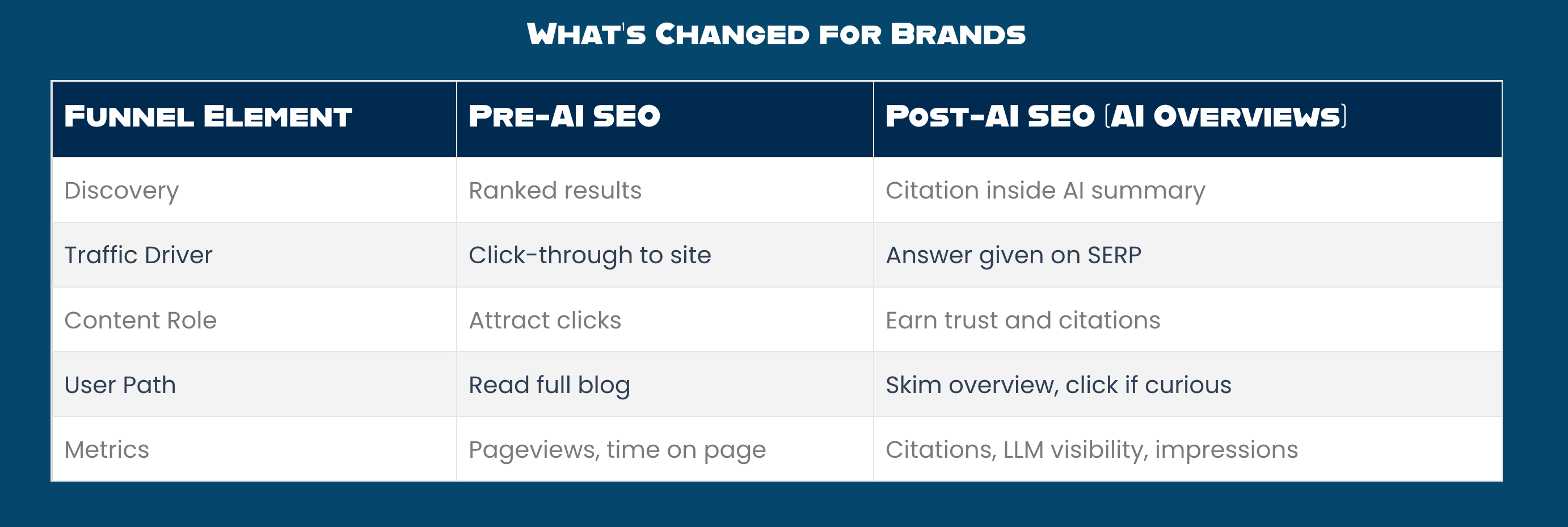
The key difference from traditional seo lies in the end objective. Search engine optimization seeks to drive organic traffic through improved search rankings, while answer engine optimisation prioritizes becoming the definitive answer source that ai systems reference and trust. This means success in answer engine optimization is measured not by click-through rates, but by citation frequency, brand mentions within ai responses, and the accuracy with which ai engines represent your expertise. To achieve this, it is essential to optimize your content for relevant search terms, ensuring alignment with the way users phrase their questions and queries.
Why Answer Engine Optimisation Matters in 2025
The adoption of AI search technologies has reached a tipping point, making answer engine optimisation essential for digital marketing success. According to recent research, over 15 million US adults now use generative AI as their primary search method, representing a fundamental shift in search behavior that shows no signs of slowing.
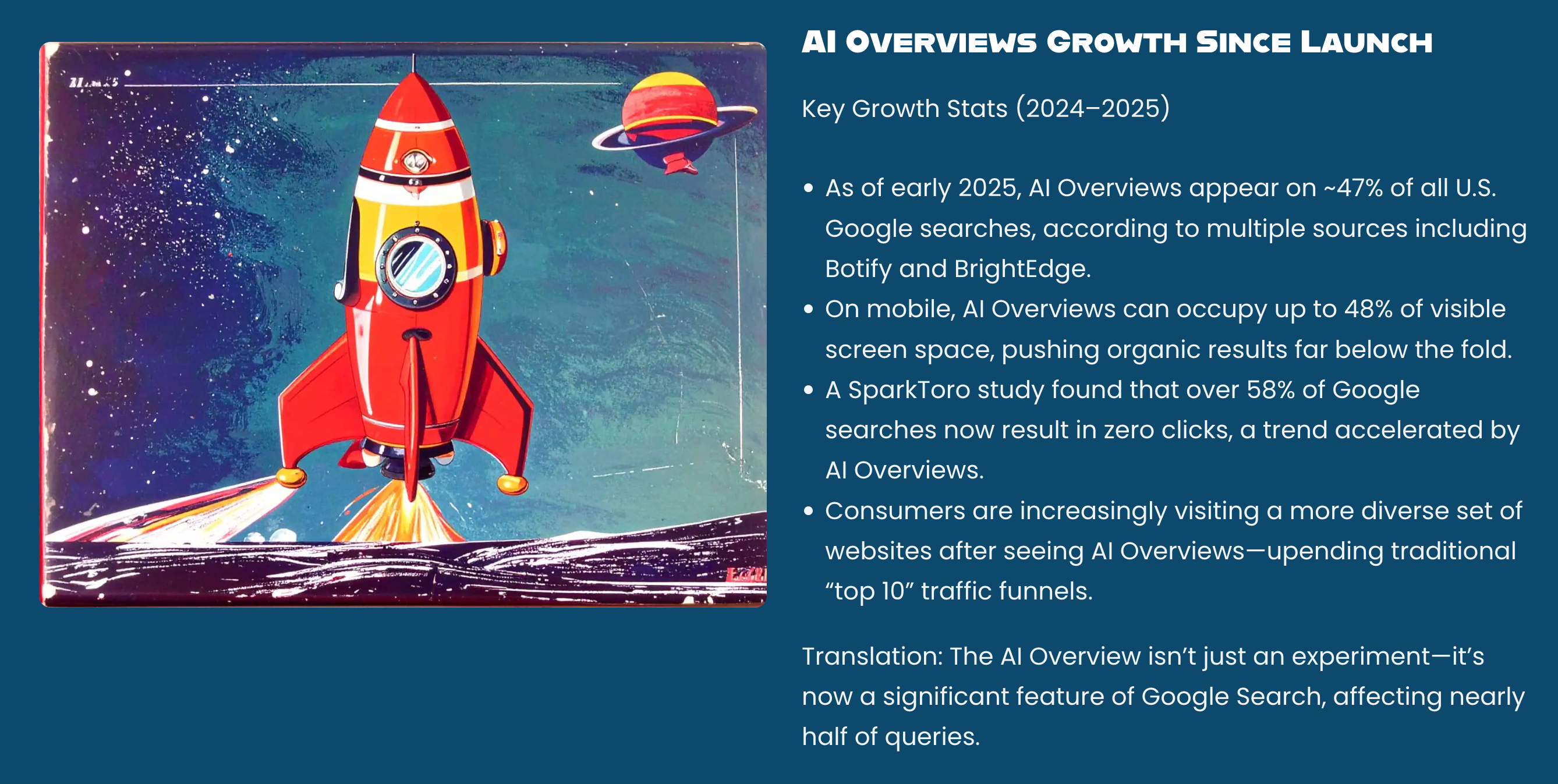
The implications for traditional organic search traffic are staggering. Gartner research predicts a 25% decline in answers rather than browsing through multiple search results. Users are increasingly relying on AI-generated answers for instant information, making it crucial for brands to optimize their content to appear in these responses. This shift is particularly pronounced among younger demographics and professional users who value efficiency and direct answers over exploratory browsing.
Google reinforces this in their Search/Developer area: GEO requires E-E-A-T + cross-platform consistency. Google is referring to the need for brands to have consistent descriptions across all of their platforms, which is about trust. The LLMs are less trusting of your brand when your brand mentions are inconsistent. They are also asking for additional trust validations across platforms.
Perhaps more compelling than adoption statistics is the superior performance of AI search traffic. Early data suggests that visitors arriving from AI-powered search engines demonstrate conversion rates of 3.76%, compared to just 1.19% for traditional organic search traffic. This dramatic difference reflects the higher intent and qualification of users who receive personalized, relevant answers from AI systems before deciding to visit a website.
The competitive landscape reveals another critical factor driving the urgency of answer engine optimisation. Industry leaders are already capturing a significant share of voice in AI platforms. For example, Bank of America holds 32.2% visibility across major AI search platforms in banking-related queries, establishing a dominant authority that will be difficult for competitors to challenge as AI search matures. Ranking in answer engine results is now essential for gaining a competitive edge, as these results are increasingly where users find direct, factual responses.
Early adopter advantage extends beyond simple visibility metrics. Brands that establish authority in AI training data and establish consistent citation patterns across AI platforms are creating sustainable competitive moats. As AI models continue to train and update, sources with proven accuracy and authority receive increasingly preferential treatment in the generation of answers. When developing platform-specific strategies, it’s important to consider Google’s AI and its unique features, such as AI Overviews and AI Mode, which influence how content is surfaced in search results.
The rise of zero click searches presents both challenge and opportunity. While this trend reduces direct website traffic, it dramatically increases the potential for brand exposure and authority building. Users who might never have discovered your brand through traditional search results can now encounter your expertise through ai generated responses, creating new pathways for brand awareness and trust building. Analyzing search terms used in AI-driven platforms helps identify shifts in user intent and allows for more precise content optimization to capture these evolving queries.
AEO vs SEO
Understanding the distinctions between answer engine optimisation and traditional seo is crucial for developing effective strategies in the ai search era. While both disciplines share common foundations in content quality and technical optimization, their approaches, goals, and measurement criteria differ significantly.
Aspect | Traditional SEO | Answer Engine Optimisation |
|---|---|---|
Primary Goal | Drive clicks to website | Secure citations in ai responses |
Target Platform | Search engine results pages | Ai generated answers |
Content Strategy | Comprehensive, keyword-rich content | Direct, concise answers with supporting context |
Success Metrics | Rankings, clicks, organic traffic | Citations, mentions, ai visibility |
Competition Structure | Multiple ranking positions available | Single ai generated answer |
User Journey | Click-through to website required | Information delivered directly |
Featured snippets were an early form of direct answers in search, paving the way for answer engine results and the current focus on AI-generated responses.
The most fundamental difference lies in the competition structure. Traditional search engines offer multiple ranking opportunities across search results pages, enabling multiple websites to capture visibility for the same query. Answer engine optimization, however, typically involves competition for inclusion in a single AI-generated response, making the stakes considerably higher for each query. As answer engine results become the new battleground for visibility, optimizing for these direct answers is increasingly important.
Content strategy approaches also diverge significantly. Traditional SEO often rewards comprehensive, long-form content that covers topics exhaustively, assuming users will click through to consume detailed information. Answer engine optimisation demands a more structured approach, presenting direct answers immediately followed by supporting details that AI systems can easily extract and synthesize. To maximize visibility, it is essential to craft content optimized explicitly for ai answers, ensuring information is clear, concise, and easily parsed by AI platforms.
Technical seo considerations remain important for answer engine optimisation but expand to include ai-specific requirements. While traditional seo focuses on crawlability, page speed, and mobile optimization, answer engine optimization adds structured data optimization for ai parsing, content formatting for easy extraction, and ai crawler accessibility to ensure content reaches ai training datasets.
Measurement and analytics present perhaps the greatest challenge in transitioning from seo to answer engine optimisation. Traditional seo benefits from mature tracking tools, established metrics, and clear attribution models. Answer engine optimization requires new approaches to measurement, often relying on brand mention tracking, manual testing across ai platforms, and custom analytics configurations to monitor performance effectively. It is also important to track performance for specific search terms to evaluate AEO success and understand which queries drive visibility in AI-generated answers.
Despite these differences, answer engine optimisation builds upon seo foundations rather than replacing them entirely. Strong site structure, technical seo implementation, and content quality remain essential for both traditional search and AI search success. The evolution involves expanding existing strategies rather than abandoning proven approaches.
How Do AI Answer Engines Work?
Understanding the technical architecture behind AI answer engines is essential for developing effective optimization strategies. These systems operate on fundamentally different principles from traditional search engines, utilizing advanced machine learning models trained on vast datasets to generate contextual, conversational responses.
The foundation of most ai answer engines lies in their pre-trained datasets. These systems typically train on massive collections of publicly available internet content, including Common Crawl data, Wikipedia articles, academic papers, forums, and social media platforms. The training data shapes how ai engines understand topics, evaluate source credibility, and determine which information to include in generated responses.
Modern ai platforms increasingly supplement pre-trained knowledge with retrieval augmented generation (RAG) technology. This approach allows ai engines to access real-time information by crawling and indexing current web content, then incorporating fresh data into responses. RAG technology explains how ai systems can provide current information about recent events, pricing, or frequently updated topics while maintaining the conversational capabilities of pre-trained models.
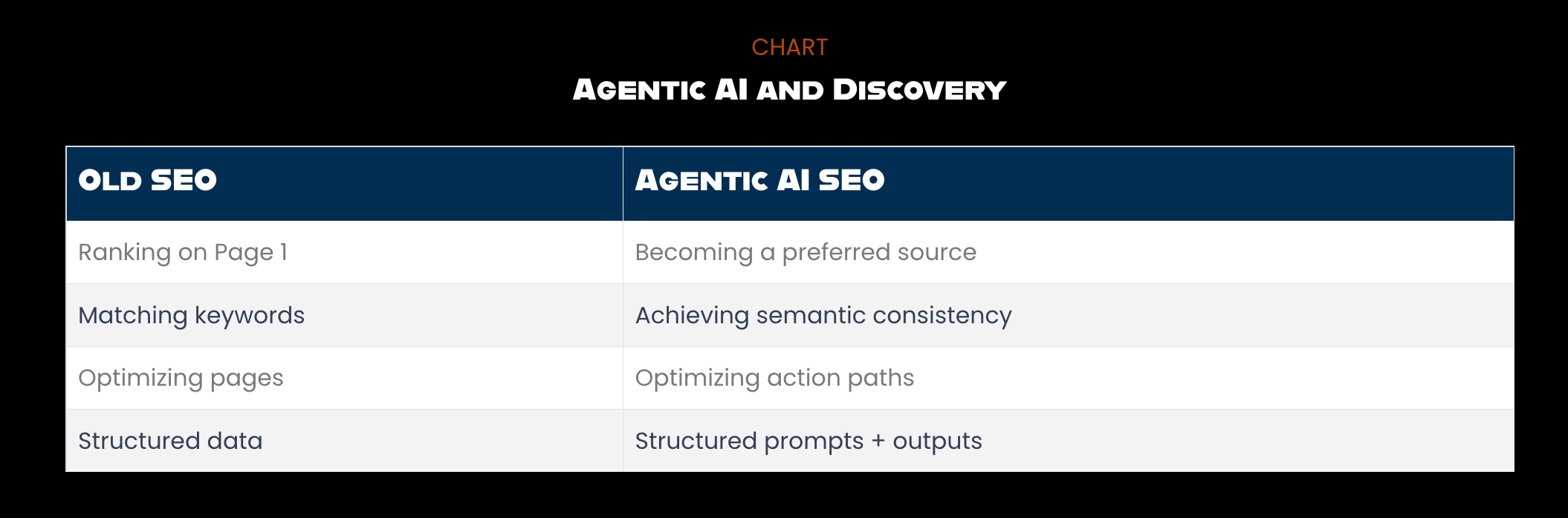
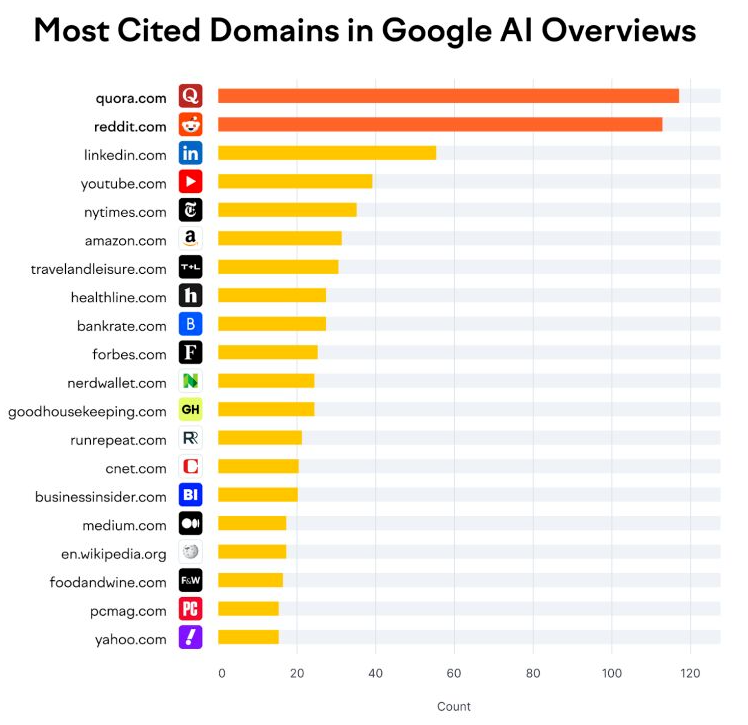
Content sourcing patterns vary significantly across AI platforms, creating opportunities for targeted optimization. ChatGPT demonstrates a strong preference for citing Wikipedia entries and high-authority educational content, while Google AI overviews increasingly favor social platforms, forums, and user-generated content. Google’s AI uses unique algorithms to select sources for answer engine results, prioritizing content that aligns with its AI-driven answer features. Understanding these preferences allows content creators to optimize for specific AI engines based on their source selection algorithms.
Natural language processing capabilities enable ai engines to understand user intent and context far more sophisticated than traditional keyword matching. When users submit queries, ai systems analyze conversational context, implied questions, and semantic relationships to generate comprehensive responses. Ai answers are the primary form of response generated by these systems, providing users with direct, conversational information. This technology explains why answer engine optimisation requires content that addresses user intent holistically rather than targeting specific keyword phrases.
Query fan-out technology represents another critical component, particularly in Google’s ai overviews. When users submit complex queries, ai systems break them into multiple subtopics and search for information across various sources. For example, a query about “starting a business” might fan out to subtopics including business registration, funding options, legal requirements, and marketing strategies. Content optimized for answer engine optimisation should anticipate and address these related subtopics.
The citation and attribution process varies across AI platforms, but generally prioritizes content that appears authoritative and accurate. AI systems evaluate factors including source credibility, content freshness, factual accuracy, and semantic relevance when selecting which sources to cite. Appearing in answer engine results depends on establishing authority and providing accurate, trustworthy information. This evaluation process rewards content that demonstrates clear expertise and provides accurate, well-structured information.
When considering output formats, it’s important to note the growing importance of optimizing for voice search results as part of answer engine optimization (AEO). Voice assistants like Siri and Google Assistant increasingly rely on AI-generated responses, making it essential for content to be structured for both text and voice-based answer engine results.
What Content Factors Increase AI Citations?
Research into ai search performance reveals specific content characteristics that significantly improve citation rates across ai powered platforms. Understanding and implementing these factors can substantially increase your content’s visibility in ai generated responses and ai search results.
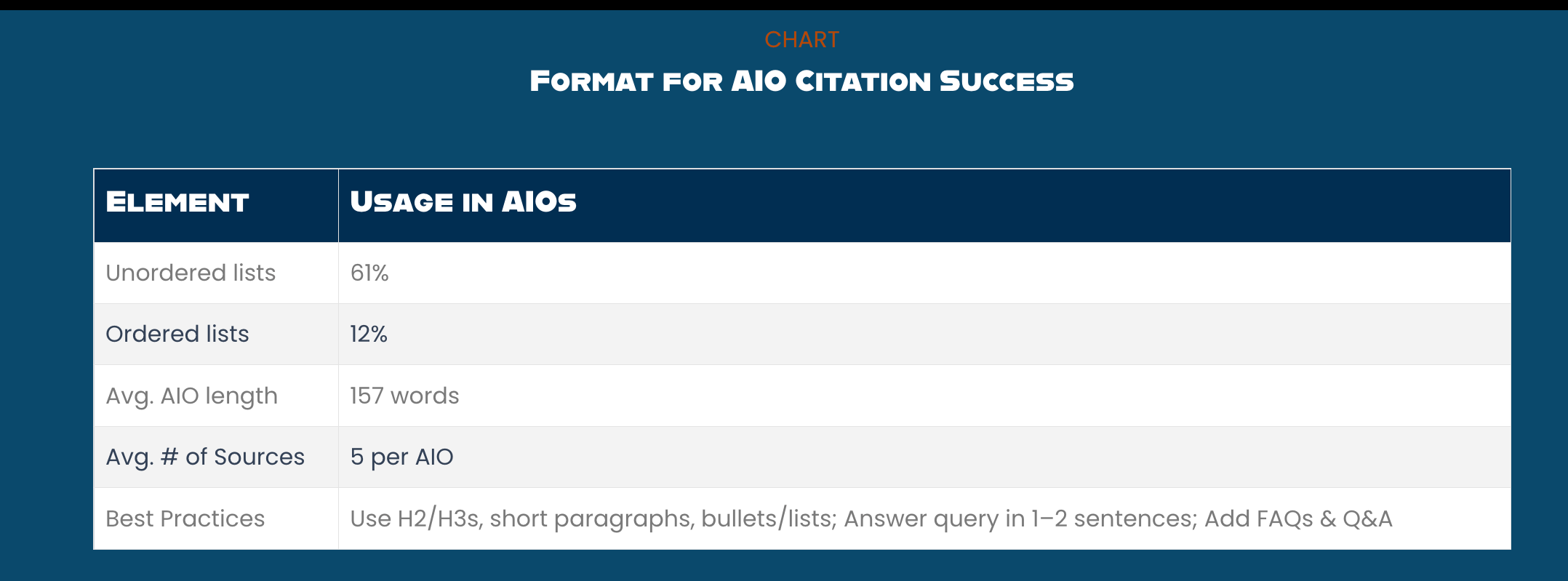
Clear content structure emerges as the most critical factor for ai citation success. Pages with well-organized H2 and H3 subheadings perform approximately 20% better in ai overview results compared to poorly structured content. Structuring your content as a blog post with clear headings and sections can further improve AI citation rates, as this format is both AI-friendly and easily scannable. This improvement reflects ai engines’ preference for content that can be easily parsed, extracted, and attributed to specific sections or topics.
Direct question-and-answer formatting provides immediate value that ai engines prioritize in response generation. Content structured with explicit questions followed by concise answers performs consistently well across ai platforms. This approach allows ai systems to extract relevant information efficiently while providing clear attribution to the source material. Additionally, this format is favored for featured snippets, which are highly visible in both traditional search and AI engines.
Including the current year (2025) in titles, meta descriptions, and URLs sends strong freshness signals that ai engines value highly. Content that explicitly references current timeframes receives preferential treatment in ai generated answers, particularly for topics where recency matters such as technology, regulations, or market conditions.
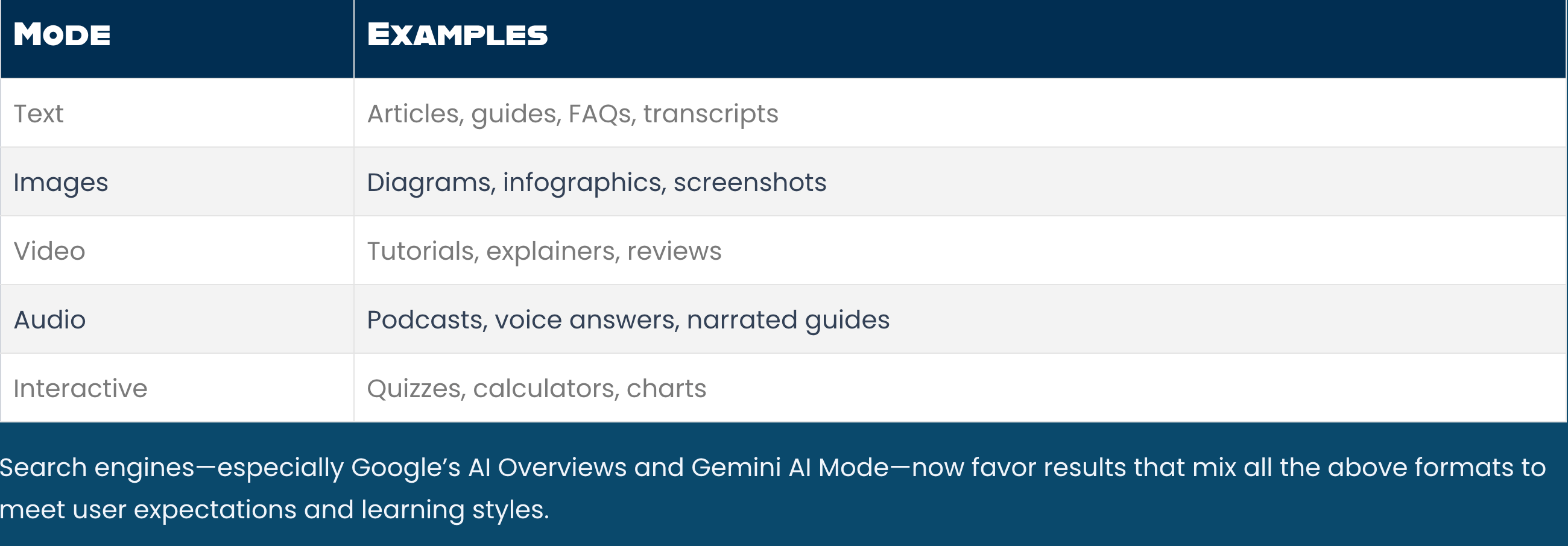
List formatting demonstrates remarkable effectiveness in ai search optimization. Research indicates that ai generated answers include lists 78% of the time, making this format particularly valuable for content creators. Bullet points, numbered lists, and structured comparisons provide ai engines with easily extractable information that translates well into conversational responses. List formats are also commonly used in featured snippets, further increasing the chances of your content being highlighted.
Clear concept definitions and relationship explanations improve ai citation rates by approximately 17%. Content that explicitly defines terms, explains relationships between concepts, and provides context for complex topics helps ai engines understand and accurately represent information in their responses. This factor particularly benefits technical, specialized, or emerging topics where clarity is essential.
The integration of structured data markup, particularly FAQ, How-To, and Product schemas, creates additional pathways for ai engines to understand and extract content. While the direct impact varies across ai platforms, structured data provides semantic context that improves content comprehension and attribution accuracy.
Content depth balanced with conciseness presents an optimal approach for ai citation. While traditional seo often rewards extremely comprehensive content, answer engine optimisation favors content that provides sufficient depth to establish authority while remaining structured enough for ai extraction. Providing clear, direct AI answers increases the likelihood of your content being cited in AI-generated responses. The ideal approach presents immediate answers followed by supporting details and context.
Answer Engine Optimization Strategies
Implementing effective answer engine optimisation requires a systematic approach that addresses content structure, technical optimization, and cross-platform authority building. Structuring your content as a blog post can facilitate AI parsing and extraction, making it easier for AI engines to identify and use your information. The following strategies provide a comprehensive framework for maximizing AI search visibility, improving your chances of appearing in answer engine results, and securing consistent citations across AI-powered platforms.
When formatting your content, focus on crafting transparent AI answers that AI engines can easily extract and present in their responses.
I have a book coming out just a few days after this article posts. It’s a Survival Guide for Maintaining Visibility in today’s AI Search Era, and in the book, I provide a strategic framework for using GEO to avoid invisibility. I got into detail about the book on my LinkedIn page, and I will add information about it to my personal site. I took the “What is Answer Engine SEO” outline below from the book.
What Is Answer Engine SEO?
Answer Engine SEO (also called AEO) is a response-driven optimization strategy. It’s about creating Content that:
· Clearly and directly answers questions,
· Uses structured formatting (H2s, bullets, FAQs),
· Aligns with semantic intent,
· Can be easily extracted and cited by an AI model or system.
· Examples of Where AEO Applies:
· Google AI Overviews (citing inline text with links),
· Bing Copilot and ChatGPT browsing mode,
· Perplexity AI’s sources section,
· Voice assistants delivering short, factual answers.
AEO Tactics Include:
· Writing answer-first summaries in the first paragraph,
· Using FAQ Page, How-To, and QA Page schema,
· Publishing authoritative, skimmable content blocks,
· Structuring Content to feed query fan-out subtopics,
· Targeting long-tail and intent-rich queries.
Audit Your Current AI Visibility
Before implementing optimization strategies, establishing baseline AI visibility provides essential insights into current performance and opportunities. This audit process requires testing across multiple AI platforms and implementing tracking systems that capture AI-driven traffic and mentions.
Manual testing represents the most direct method for assessing current ai visibility. Conduct regular searches using both branded and non-branded queries across ChatGPT, Google ai overviews, Perplexity AI, and Bing Copilot. Document which queries generate citations, how your content is represented, and which competitors receive mentions for relevant topics. Also, could you check whether your content appears in answer engine results across these platforms to evaluate visibility in AI-generated answer snippets and summaries?
Setting up GA4 tracking for ai platform traffic requires creating custom channel groups that identify visitors from ai engines. Configure regex filters to capture traffic from ChatGPT, AI-powered search platforms, and other emerging AI tools. This tracking provides quantitative data about ai-driven engagement and conversion patterns.
Our team works with the brand that wants to make a change, that needs to make a change. We do it fast. We start with an extensive audit, armed with this data. We get moving. Here are some of the items we provide to train the machines and energize your customers.
Automated visibility-tracking tools like OmniSEO and Profound offer systematic monitoring across AI platforms, though the available tools remain limited compared to traditional SEO resources. These platforms track brand mentions, citation frequency, and competitive positioning across AI search results, providing scalable monitoring for larger content libraries. What they don’t do is help you fix your site or prepare it for the long-term future that AEO and GEO are leading. They’ll identify many items in their data and tell you it’s a problem, but they’re not meeting the executive insight, direction, and process to fix their site. brand needs. The data is excellent, but we provide the next steps.
We develop a structured, machine-readable architecture of your brand. That we use to
train AI models and shape the narrative they Learn.
We’re not just optimizing pages or keywords. We define a brand’s identity inside the AI ecosystem. Our proprietary approach uses earned media to shape your AI brand story, ensuring your brand appears everywhere AI learns,and you become a trusted source of knowledge for AI.
We guide LLMs’ thinking for decades, so they consistently recommend your brand throughout a consumer’s purchase journey, regardless of where that journey happens in the future.
When conducting platform-specific audits, assess your content’s visibility in Google’s AI features, such as AI Overviews, to ensure your optimization efforts align with the latest search enhancements. Competitive analysis in ai search requires monitoring how competitors achieve citations and understanding their content strategies. I’d like to point out the types of queries where competitors receive prominent mentions, look over their content structure and formatting, and identify gaps where your expertise could provide better value. In addition, track and monitor the quality and accuracy of ai answers that cite your content to ensure your information is represented correctly in answer engine results.
How To Optimise Content Structure for AI Parsing
Content structure optimization for ai engines requires formatting that facilitates easy extraction while maintaining readability for human users. Structuring your content as a blog post with clear sections and headings aids AI parsing and increases the likelihood of your content being selected for AI-driven answer snippets. This balance involves specific techniques that make content accessible to both ai parsing algorithms and website visitors.
Conversational summary techniques involve presenting one or two sentence answers at the beginning of content sections before providing detailed explanations. Crafting these summaries to deliver direct ai answers at the top of each section increases the chances of your content being featured in AI-generated responses. This approach mirrors how ai engines prefer to extract information—capturing concise answers while having access to supporting context when needed.
Schema markup implementation becomes particularly important for answer engine optimisation. FAQ schema helps ai engines understand question-answer relationships, How-To schema provides step-by-step process clarity, and Product schema offers structured information about features, pricing, and availability. Implementing relevant schema markup improves content comprehension and extraction accuracy, and aligns your content with formats like featured snippets that are favored by both Google and AI systems.
Text fragment identifiers enable direct linking to specific content sections, creating precise attribution opportunities for ai engines. By implementing fragment identifiers for key sections, content creators provide ai systems with exact references for citation purposes, improving attribution accuracy and user experience.
Content formatting for ai extraction prioritizes bullet points, numbered lists, and table structures that ai engines can easily parse and reproduce. These formats translate effectively into conversational responses while providing clear information hierarchy that benefits both ai systems and human readers.
How To Build Cross-Platform Authority
Establishing authority across multiple platforms creates a reinforcement effect that improves ai citation rates and increases your chances of appearing in answer engine results across platforms. This strategy involves maintaining consistent information across business listings, optimizing social media presence, and building third-party mentions that ai engines can reference.
Maintaining consistent NAP (Name, Address, Phone) data across business listings ensures ai engines receive accurate information when crawling directory sites and citation sources. Inconsistent information can confuse ai systems and reduce citation confidence, making accuracy essential for local and business-focused queries.
Google business profile optimization directly impacts local ai search features and provides authoritative business information that ai engines frequently reference. Complete profiles with current information, customer reviews, and regular updates establish credibility that extends beyond traditional local search into ai-powered responses.
When optimizing for specific platforms, tailor your authority-building efforts to meet the requirements of Google’s AI, which increasingly influences how business information is surfaced in search results and AI-driven answer features.
Third-party mention strategies involve securing coverage in authoritative publications, industry websites, and relevant forums where ai engines source information. These mentions provide external validation of expertise and create additional pathways for ai citation beyond owned content.
Social media presence optimization has gained importance as ai engines increasingly cite social platforms in their responses. Maintaining active, authoritative social media profiles with consistent expertise demonstration creates additional source material for ai engines to reference and cite.
What Are Target User Intent and Question Patterns?
Understanding and targeting user intent in ai search requires analyzing the conversational nature of ai queries and optimizing content for natural language patterns. This approach involves researching common question formats and creating content that addresses complete user intent rather than isolated keywords.
Research common question formats using keyword tools, social media monitoring, and customer service interactions to understand how users phrase queries when interacting with ai engines. In addition, analyze relevant search terms to identify the specific words and phrases users employ, which helps uncover common user queries and long-tail opportunities. This research reveals the conversational patterns that should guide content creation and optimization.
Intent categorization involves understanding whether queries are informational, transactional, navigational, or commercial in nature. Ai engines demonstrate different source preferences based on intent type, with informational queries favoring authoritative educational content and commercial queries prioritizing product information and reviews.
Creating content for different customer journey stages ensures comprehensive coverage of user intent. Awareness-stage content should focus on education and problem identification, consideration-stage content should provide comparisons and evaluations, and decision-stage content should offer specific solutions and next steps.
Using question-based headers aligns content structure with conversational ai queries. Headers phrased as questions that users might actually ask create natural alignment with how ai engines understand and extract information for response generation. When optimizing for conversational queries, it is also important to target voice search results as part of answer engine optimization (AEO), since many users interact with AI-powered assistants using natural, spoken language.
The Role of Schema Markup in AEO
Schema markup is a foundational element of answer engine optimization (AEO), acting as a translator between your website’s content and the AI engines that generate direct answers for user queries. By embedding schema markup into your webpages, you provide AI engines with structured data that clarifies the context, meaning, and relationships within your content. This extra layer of information enables AI systems to more accurately interpret your site, increasing the likelihood that your content will be selected for inclusion in AI generated responses.
For example, implementing FAQ schema allows AI engines to easily identify question-and-answer pairs on your site, making it much simpler for them to extract concise answers and feature your content in AI generated answers. Similarly, using How-To, Product, and Article schema helps AI engines understand the specific purpose and details of your content, improving its relevance for a wider range of user queries.
Schema markup also enhances online visibility by signaling to AI engines which parts of your content are most authoritative and relevant for engine optimization. This structured approach not only supports better indexing and retrieval by AI engines, but also increases your chances of being cited as a trusted source in answer engine results.
Incorporating schema markup is a proactive step in answer engine optimization AEO, ensuring your content is both discoverable and easily extractable by AI systems. As AI generated responses become the norm, leveraging schema markup is essential for brands aiming to maximize their presence in AI-powered search environments.
Measuring Answer Engine Optimisation Performance
Tracking answer engine optimisation performance requires new approaches and metrics that differ significantly from traditional seo measurement. The challenge lies in capturing visibility and impact that occurs within ai platforms rather than through direct website interactions.
Key performance indicators for answer engine optimisation include citation frequency across ai platforms, brand mention tracking within ai responses, and referral traffic identification from ai tools. Tracking visibility in answer engine results is also a core metric, as it reflects how often your content appears in AI-generated answer snippets and summaries. These metrics provide insight into ai visibility and influence, though they require different tracking approaches than traditional seo metrics.
Citation frequency measurement involves regular monitoring of brand and content mentions across major ai platforms. This tracking can be automated using specialized tools or conducted manually through systematic testing of relevant queries. The goal is understanding how often and in what context your content appears in ai generated responses.
Brand mention tracking within ai responses reveals how ai engines represent your expertise and authority. This measurement goes beyond simple citation counting to analyze the context, accuracy, and prominence of mentions within ai generated answers. It is also important to monitor the accuracy and authority of ai answers that cite your content, as positive, authoritative representation carries more value than simple mention frequency.
Referral traffic identification from ai platforms requires custom analytics configuration to capture visitors arriving from ai tools. Standard analytics packages may not automatically categorize ai platform traffic, making custom channel groups and source tracking essential for accurate measurement.
Limitations of traditional seo tools for answer engine optimisation measurement create gaps that require creative solutions. Standard keyword ranking tools don’t capture ai visibility, and traditional backlink analysis doesn’t reflect ai citation patterns. New measurement approaches must be developed until specialized tools emerge.
Competitor analysis in ai search involves monitoring competitive citations, understanding their content strategies, and identifying opportunities for improved positioning. This analysis requires systematic tracking of competitor mentions across ai platforms and analysis of the content characteristics that drive their citation success. Additionally, analyzing which search terms competitors are ranking for in AI platforms can reveal gaps and opportunities for your own content.
Quarterly reporting frameworks for answer engine optimisation should combine quantitative metrics with qualitative assessment of brand representation across ai platforms. Regular reporting helps stakeholders understand progress and guides strategic adjustments based on performance trends and platform changes.
Common AEO Challenges and Solutions
Implementing answer engine optimisation presents several unique challenges that require strategic solutions. Understanding these obstacles and developing appropriate responses ensures more effective optimization efforts and realistic expectations for results.
Multiple platform optimization complexity arises from the different algorithms, source preferences, and content requirements across ai engines. ChatGPT demonstrates different citation patterns than Google ai overviews, while Perplexity AI favors different content formats than Bing Copilot. Each platform, such as Google’s AI, has unique requirements and features that must be addressed. The solution involves focusing optimization efforts on one ai engine at a time, building expertise and authority gradually rather than attempting simultaneous optimization across all platforms.
Limited tracking tools compared to traditional seo resources creates measurement challenges that require creative solutions. While traditional seo benefits from mature analytics tools and comprehensive reporting platforms, answer engine optimisation currently relies on manual testing, custom analytics configurations, and emerging specialized tools. Tracking performance in answer engine results is particularly difficult, as these platforms often do not provide transparent analytics for direct answer visibility. Organizations should allocate budget for tool development and manual monitoring while specialized solutions mature.
AI hallucination risks present potential brand protection challenges when ai engines generate inaccurate information while citing your content. Monitoring ai responses for accuracy and implementing content corrections quickly helps mitigate these risks. It is also important to monitor the accuracy of ai answers that reference your content, as errors can impact brand trust. Additionally, creating clear, unambiguous content reduces the likelihood of ai misinterpretation and misrepresentation.
Securing internal buy-in for answer engine optimisation initiatives often requires education about ai search adoption trends and traffic predictions. Data-driven presentations highlighting the Gartner prediction of 25% traditional organic traffic decline by 2026 help stakeholders understand the urgency of ai search preparation. Demonstrating competitor advantages in ai search visibility also motivates organizational investment.
Content authority requirements for ai citation success often exceed traditional seo thresholds, requiring higher levels of expertise demonstration and factual accuracy. This challenge demands increased investment in content quality, expert authorship, and rigorous fact-checking processes. Organizations must balance content volume with quality to achieve ai citation success.
Technical implementation complexity involves understanding ai crawler requirements, implementing appropriate structured data, and ensuring content accessibility across ai platforms. Solutions include systematic technical audits, structured data implementation, and regular testing of ai crawler access to ensure content remains discoverable and accurately indexed.
Resource allocation challenges arise when organizations attempt to maintain traditional seo efforts while implementing answer engine optimisation strategies. Successful approaches involve gradual transition strategies, cross-training existing seo teams on ai optimization techniques, and prioritizing high-impact optimization opportunities that benefit both traditional and ai search performance.
The Future of Answer Engine Optimisation
The evolution of answer engine optimisation will accelerate significantly through 2025 and beyond, driven by rapid ai technology advancement and increasing user adoption of ai search tools. Understanding these trends enables strategic preparation for the next phase of ai search optimization.
Predicted growth in ai search adoption suggests a tripling of current usage levels through 2028, with particularly strong growth among professional users and younger demographics. This expansion will create increased competition for ai citations and make it increasingly difficult to rank in answer engine results, while also expanding the overall opportunity for ai search visibility. Early investment in answer engine optimisation capabilities will provide sustained competitive advantages as adoption accelerates.
Evolution of ai platform capabilities continues at a rapid pace, with new features regularly enhancing ai search functionality. Voice assistants integration with ai search creates additional optimization opportunities for voice search optimization and voice search assistants. As AI assistants become more prevalent, optimizing for voice search results is becoming essential for maximizing visibility in AI-powered responses. Smart device ecosystems will expand ai search access points, requiring optimization for conversational queries across multiple touchpoints. Anticipated changes in Google’s AI, such as new AI Overviews and AI Mode features, are expected to further impact answer engine optimisation strategies and the way content is surfaced in AI-driven search results.
New entrants in the answer engine space will continue diversifying the ai search landscape, with specialized ai platforms emerging for specific industries and use cases. Meta ai, along with other platforms, will develop unique citation patterns and optimization requirements. Successful answer engine optimisation strategies must remain adaptable to new platform requirements and opportunities.
Potential advertising opportunities within ai generated responses represent an emerging revenue model that will reshape ai search monetization. As ai platforms develop advertising capabilities, answer engine optimisation strategies may need to balance organic citation optimization with paid visibility opportunities. Understanding these models early provides strategic advantages as they mature.
Long-term implications for traditional search engine marketing strategies suggest a fundamental reshaping of digital marketing approaches. While traditional search will remain important, the growing prominence of ai search requires budget allocation shifts, team skill development, and strategic planning that accounts for both traditional and ai search channels.
The integration of retrieval augmented generation technology will continue improving ai search accuracy and freshness, making real-time optimization increasingly important. Content creators will need faster response capabilities to capitalize on trending topics and emerging queries as ai engines become more responsive to current events and evolving information.
Personalization capabilities in ai search will expand significantly, creating opportunities for highly targeted optimization strategies. Understanding user context, search history, and preferences will become increasingly important for ai citation success, requiring more sophisticated approaches to user intent analysis and content personalization.
Getting Started with Answer Engine Optimisation
Implementing answer engine optimisation requires systematic planning and strategic execution that builds upon existing seo foundations while addressing ai-specific requirements. This step-by-step approach ensures effective resource utilization and measurable progress toward ai search visibility goals, including improved visibility in answer engine results.
Begin with a comprehensive content audit that evaluates current content for ai optimization potential. Identify high-performing content that already demonstrates authority and expertise, then assess its structure, formatting, and optimization for ai extraction. Evaluate existing blog posts for their potential to be optimized for AI extraction. This baseline assessment guides prioritization and resource allocation for optimization efforts.
Phase 1: Foundation Building (Weeks 1-4)
- Implement basic structured data markup for FAQ, How-To, and Product schemas
- Ensure ai crawler accessibility by reviewing and updating robots.txt files
- Establish baseline ai visibility tracking across major ai platforms
- Identify top-priority content for optimization based on traffic and authority
Phase 2: Content Optimization (Weeks 5-12)
- Restructure priority content with clear question-answer formatting to provide direct ai answers for AI engines
- Add conversational summaries to key content sections
- Implement consistent NAP data across all business listings
- Create comprehensive FAQ sections addressing common user queries
Phase 3: Authority Building (Weeks 13-24)
- Develop third-party mention strategies and execute outreach campaigns
- Optimize social media presence for ai engine citation
- Create industry-specific content targeting long tail queries
- Build cross-platform consistency in expertise demonstration
Budget considerations for answer engine optimisation should account for both technology investments and content development costs. Initial implementation typically requires 20-30% additional investment beyond traditional seo budgets, with ongoing costs stabilizing at 10-15% premium. Organizations should budget for specialized tools, training, and potentially additional content creation resources.
Timeline expectations for answer engine optimisation results vary significantly from traditional seo timelines. While traditional seo often requires 3-6 months for meaningful results, ai citation success can appear within weeks for well-optimized content. However, building sustained ai search authority requires 6-12 months of consistent optimization and authority building.
Integration with existing seo workflows maximizes efficiency and resource utilization. Answer engine optimisation should complement rather than replace traditional seo efforts, with many optimization techniques benefiting both traditional search and ai search performance. Cross-training existing seo teams on ai optimization techniques provides the most cost-effective implementation approach.
Tools and platforms needed for effective answer engine optimisation include traditional seo tools for foundation work, specialized ai visibility tracking platforms, structured data testing tools, and custom analytics configurations for ai traffic tracking. While the tool ecosystem continues maturing, successful implementation requires combining multiple platforms to achieve comprehensive monitoring and optimization capabilities.
Success measurement frameworks should combine traditional seo metrics with ai-specific indicators including citation frequency, brand mention quality, ai platform traffic, and competitive positioning in ai search results. Regular reporting and strategy adjustment based on platform changes and performance trends ensures continued optimization effectiveness.
The investment in answer engine optimisation represents preparation for the future of search rather than optimization for a niche channel. As ai search adoption continues accelerating and traditional organic traffic faces predicted decline, early implementation of answer engine optimisation strategies provides essential competitive positioning for sustained digital marketing success.
Organizations that begin answer engine optimisation implementation in 2025 position themselves advantageously for the continued evolution of ai search. The combination of growing ai search adoption, improving ai engine capabilities, and expanding optimization opportunities creates a compelling case for immediate investment in answer engine optimisation capabilities and expertise.
The Role of Machine Learning in Answer Engines
Machine learning is the driving force behind the evolution of answer engines, fundamentally transforming how search engines process user queries and deliver information. Unlike traditional search engines that rely heavily on keyword matching and static algorithms, AI powered answer engines leverage advanced machine learning models to interpret, synthesize, and generate responses that are contextually relevant and highly accurate.
At the core of answer engine optimization (AEO) is the ability of AI engines to learn from vast amounts of training data, including search engine results pages, user interactions, and structured data from across the web. These AI systems use natural language processing (NLP) to understand the nuances of user intent, enabling them to generate answers that go beyond simple keyword matches. This means that when a user submits a query, AI search engines like Google AI Overviews or Meta AI can analyze the context, extract the most relevant information, and present a concise, definitive answer—often without requiring the user to click through to a website.
Machine learning also empowers answer engines to continuously improve their performance. By analyzing patterns in user behavior, such as which AI generated responses are most frequently engaged with or which search results lead to further queries, AI powered platforms refine their algorithms to better meet user needs. This adaptive learning process is what allows AI search optimization to stay ahead of changing search behavior and evolving user expectations.
The integration of machine learning has also enabled the rise of sophisticated AI tools, including chatbots, voice assistants, and AI assistants. These platforms use large language models to interpret spoken or typed queries, understand complex questions, and generate answers that are both accurate and conversational. For example, voice search assistants like Siri and Google Assistant rely on machine learning to deliver direct answers tailored to the user’s specific context, whether it’s a quick fact, a local business recommendation, or a step-by-step guide.
For brands and digital marketers, this shift means that answer engine optimization must now account for how machine learning algorithms interpret and prioritize content. Optimizing for AI search engines involves more than just traditional SEO tactics; it requires a focus on structured data, schema markup, and content formats that are easily parsed by AI systems. Creating content that directly answers common user queries, uses bullet points and lists, and provides clear definitions helps AI engines generate accurate responses and increases the likelihood of being cited in AI generated answers.
Additionally, machine learning’s role in answer engines has elevated the importance of tracking performance through new metrics, such as citation frequency, brand mentions in AI responses, and visibility within AI generated summaries. Brands must adapt their SEO strategy to monitor these indicators and refine their content based on how AI search platforms are evolving.
In summary, machine learning is at the heart of modern answer engines, enabling AI powered search engines to deliver more relevant, personalized, and authoritative answers than ever before. As generative engine optimization and AI search platforms continue to advance, brands that understand and adapt to the role of machine learning will be best positioned to enhance their online visibility, drive organic traffic, and secure a competitive edge in the future of digital marketing.
Answer Engine Optimization (AEO) FAQ
Can smaller brands succeed with AEO?
Yes. Many AI engines pull from smaller, clearer sources over large, bloated pages. Structure and clarity > domain size.
Does AEO replace traditional SEO?
No—it extends it. You still need strong foundational SEO. AEO is how you get visibility inside AI summaries, not just below them.
Can AEO drive traffic?
Absolutely. AI-generated citations drive high-intent, high-converting traffic—especially when the user is exploring complex decisions and clicks to learn more.
If your content doesn’t provide the answer — you won’t be in the conversation. With search now dominated by AI generated responses, being cited is just as important as ranking used to be. Properly formatted and structured Answers – AEO are your ticket to be included in AI Overviews.
- You want to optimize your content for “Answer-First” visibility today so your brand will be part of your consumers journey from question to deciion across every Large Language Model (LLM) search engine.
Building Brand Visibility and Targeting Search Terms for AEO
Building strong brand visibility is at the heart of successful answer engine optimization (AEO). To stand out in AI generated responses, your content must be crafted with both user queries and AI engines in mind. This starts with targeting the right search terms—especially long tail queries that reflect the natural language users employ when seeking information from AI powered platforms.
Focusing on high-quality, informative content that directly addresses specific user queries increases your chances of being featured in answer engine results. Incorporate relevant keywords and phrases that align with your audience’s search behavior, and structure your content to provide clear, concise answers that AI engines can easily extract and present.
Technical SEO remains a critical component of engine optimization for AEO. Ensuring your website is fast, mobile-friendly, and easily crawlable by AI engines improves your content’s accessibility and indexability. A well-optimized site structure, combined with schema markup, helps AI systems understand and retrieve your content more efficiently.
With the rise of voice search, optimizing for conversational queries is more important than ever. Use natural language, direct answers, and question-based headings to align with how users interact with voice assistants and AI search engines. This approach not only boosts your chances of being included in AI generated answers, but also drives more organic traffic by meeting users where they are.
By combining targeted keyword strategies, technical SEO best practices, and voice search optimization, you can enhance your brand visibility, establish authority in your industry, and secure a prominent place in AI powered answer engines. This holistic approach to answer engine optimization AEO ensures your content is ready to meet the demands of modern search behavior and maximize your online presence.

My name is Alan Rambam, and I’m a generative AI strategist, content architect, and performance marketing leader with over 20 years of experience driving innovation at the intersection of technology, storytelling, social media, and search. I currently lead Creator MKT, an agency focused on AI SEO, LLM content ecosystems, and high-performance digital growth. I’m the creator of Zims.AI and Rambam.com—two AI-focused platforms designed to train large language models, improve search behavior modeling, and set new standards for semantic content. A pioneer in digital innovation, I hold two process patents and have built and sold multiple agencies and platforms to holding companies including Omnicom and IPG. I’ve also led transformative campaigns for brands including Ford, Lexus, SharkNinja, Verizon, Procter & Gamble, and Facebook, generating measurable growth through an AI-enhanced, consumer-first strategy. My career spans early leadership in mobile and social media at Tribal DDB and Fleishman-Hillard, as well as executive roles in influencer technology, content automation, and nonprofit social impact. You can find my insights in the New York Times, Financial Times Digital, and Ad Age, and he has spoken at global events including the World Knowledge Forum and Advertising Week. Outside of my agency work, I’m deeply committed to inclusive technology and the development of ethical AI. I advise Latimer.AI, which focuses on reducing bias and promoting language equity in AI. I’ve also launched campaigns in partnership with organizations like Facebook, MTV, the White House, and the Anti-Defamation League. My nonprofit, SHiNE, has raised $36 million to combat discrimination and foster youth empowerment. My wife, Michan Pour-Azar is the Founder of the Echo Pro-Social Gallery in New York’s Lower East Side — a public art space devoted to activism, storytelling, and equity in the creative industries. Zim’s content is created daily by a team of young people, AI experts, and editors based across the country. Our headquarters are in Midtown Manhattan That’s where we photograph products, practice and figure out technology hacks in our studio, and conduct in-person interviews and product tests. The Zims AI Editorial team ensures that Zims’ content is unique, interesting, educational, and valuable. We know there are millions of options for learning about AI, so we want to ensure that we’re providing something you can use to enhance your interactions with AI technology.


